March 3, 2026

Categories: Inside the Cauldron

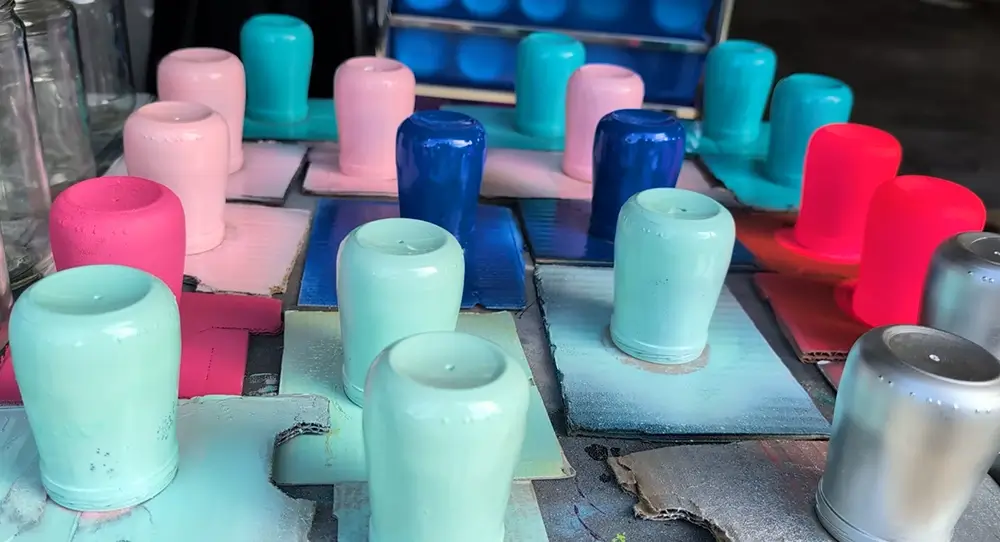
Baby Food Jars Step 1

Most people assume creativity thrives on more. More space. More supplies. More options. More time.

It makes sense — the more you have, the more you can make, right? I even believed that when I was first starting out. I held off starting with excuses about not having enough space, nowhere to dry my work, and then wondering what I would even do with the pieces once they were created.

But I’ve since found the opposite to be true. Some of my best ideas have come not from having endless possibilities, but from working with less and improvising as I go. In fact, the more possibilities I have, the more I feel my creativity stifled.

Constraint, for me, has never been the enemy of creativity. It has been the frame that makes it sharper.

Creating in a Small Space

Living and working in an RV changed how I thought about things — how I viewed functionality and how I moved through a space.

There wasn’t room for excess. Every object had to justify its presence. Storage was limited, surfaces were shared, and décor could quickly become clutter.

That reality forced me to look at what I had and what I needed rather than just buying things for how they looked. I couldn’t buy a pretty vase just to take up space I didn’t have when what I really needed was storage — but I still wanted something pretty. That’s where the idea of combining the two came from: beauty and function together as one.

But space was still limited. I had the interior of my RV and a small shed for everything I couldn’t store inside.

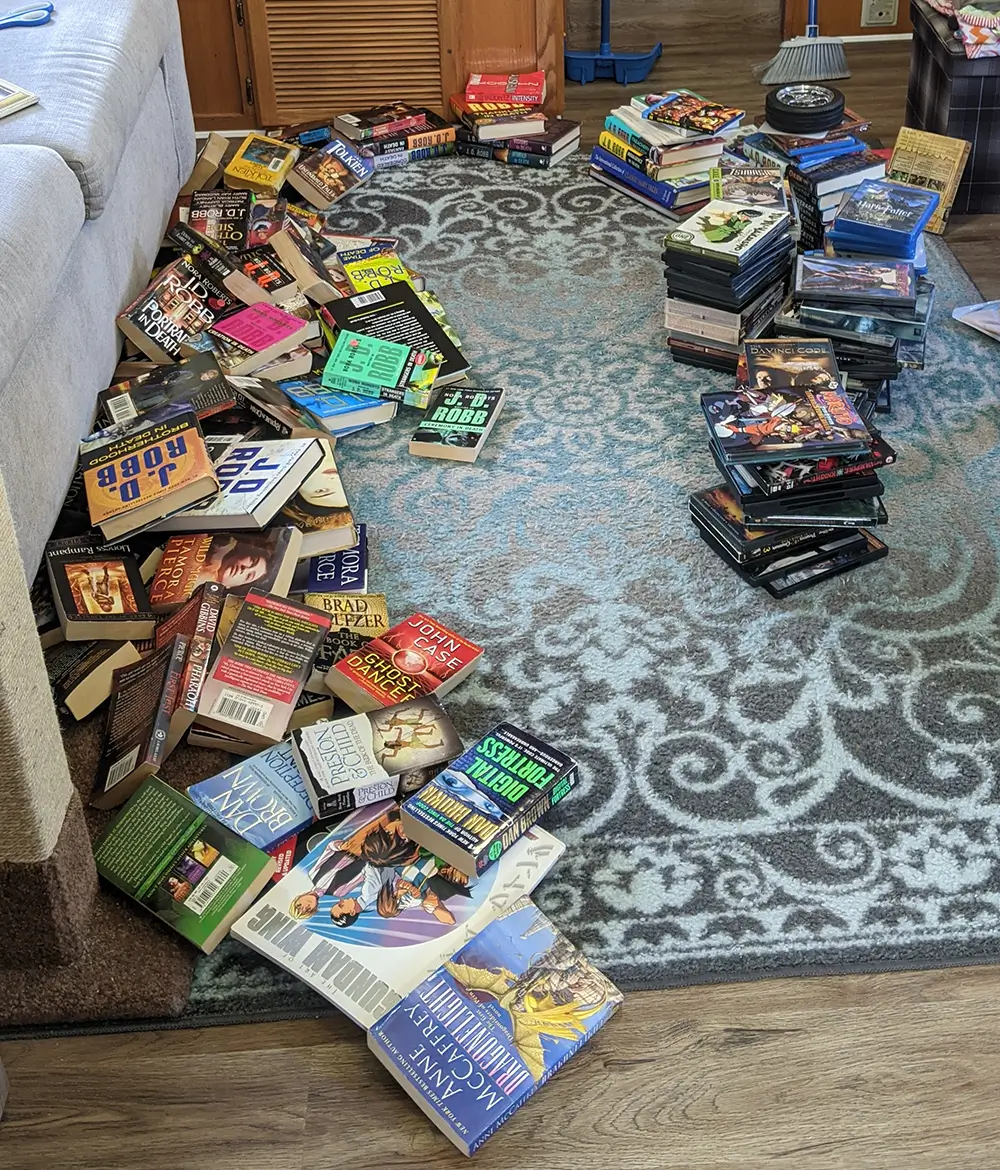
I couldn’t keep every jar I came across. I couldn’t stockpile materials the way I might if I had a full studio. I had to choose what stayed. I had to decide what mattered. Objects like my book collection, for example — I loved the books I had read, but I rarely reread them, and they took up a ton of space. There were other options; I just had to make decisions about how I used my space.

And that kind of limitation shapes creativity in a very practical way. When space is limited, your ideas have to be deliberate.

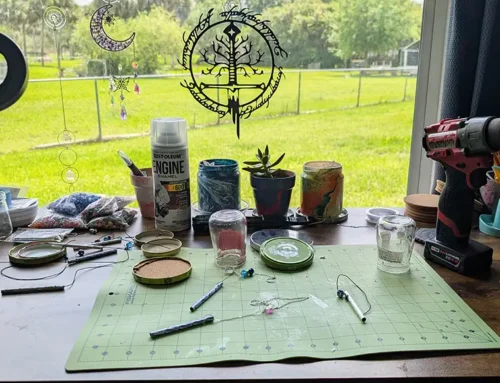
Even today I maintain a small workspace and many of the same limitations I had before — actually a bit smaller now. I eventually cleaned out the shed enough to use it as a drying station, and now I work from a single table for the entire process.

Limits don’t always have to be limitations. Sometimes they can be freedom.

Book purge

Letting Materials Lead

I’ve never walked into an art store with a fully formed vision and bought exactly what I needed to execute it.

More often, I look at what I already have.

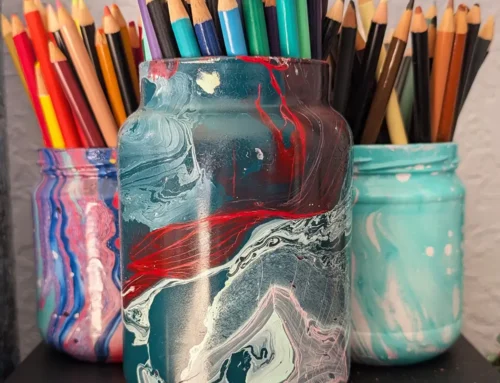
A stack of baby food jars.
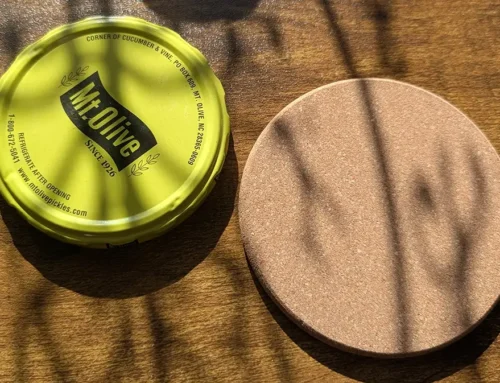
A box of salsa lids.
A pile of old CDs that followed me from another century.

The material comes first. The idea comes second.

That means my creativity has to adapt. Instead of asking, “What do I want to make?” I’m often asking, “What could this become?”

Constraint turns the process into problem-solving. It forces imagination to stretch instead of defaulting to convenience.

One Chance, No Redo

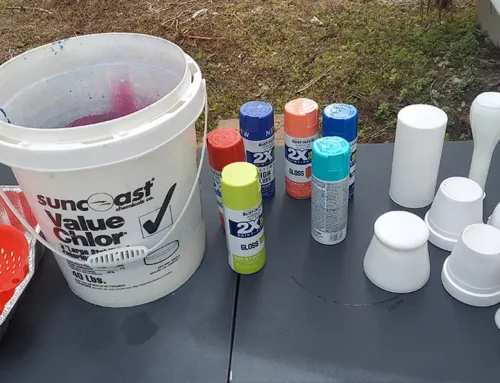
My hydrodipping process carries its own set of limits.

There is only one chance to get it right.

I choose the colors, but I don’t choose the pattern. Once the glass meets the water, the design forms and changes in seconds. There is no undo button. No repainting the exact same piece.

That tension — that commitment — is part of the work.

The constraint isn’t frustrating. It’s exhilarating. It asks me to trust the process, to surrender control while still being intentional.

It’s structured and chaotic at the same time.

The Freedom of Edges

There’s something grounding about working within limits.

Too many choices can be overwhelming. Infinite options can lead to paralysis. Boundaries narrow the field. They sharpen decision-making. They demand intention.

In my work, constraint has never meant “less.” It has meant clearer.

Clearer ideas.
Clearer purpose.
Clearer identity.

Maybe creativity doesn’t need endless freedom.

Maybe it just needs the right edges.
Share it with your friends!

Leave A Comment

March 3, 2026

Categories: Inside the Cauldron

Baby Food Jars Step 1

Most people assume creativity thrives on more. More space. More supplies. More options. More time.

It makes sense — the more you have, the more you can make, right? I even believed that when I was first starting out. I held off starting with excuses about not having enough space, nowhere to dry my work, and then wondering what I would even do with the pieces once they were created.

But I’ve since found the opposite to be true. Some of my best ideas have come not from having endless possibilities, but from working with less and improvising as I go. In fact, the more possibilities I have, the more I feel my creativity stifled.

Constraint, for me, has never been the enemy of creativity. It has been the frame that makes it sharper.

Creating in a Small Space

Living and working in an RV changed how I thought about things — how I viewed functionality and how I moved through a space.

There wasn’t room for excess. Every object had to justify its presence. Storage was limited, surfaces were shared, and décor could quickly become clutter.

That reality forced me to look at what I had and what I needed rather than just buying things for how they looked. I couldn’t buy a pretty vase just to take up space I didn’t have when what I really needed was storage — but I still wanted something pretty. That’s where the idea of combining the two came from: beauty and function together as one.

But space was still limited. I had the interior of my RV and a small shed for everything I couldn’t store inside.

I couldn’t keep every jar I came across. I couldn’t stockpile materials the way I might if I had a full studio. I had to choose what stayed. I had to decide what mattered. Objects like my book collection, for example — I loved the books I had read, but I rarely reread them, and they took up a ton of space. There were other options; I just had to make decisions about how I used my space.

And that kind of limitation shapes creativity in a very practical way. When space is limited, your ideas have to be deliberate.

Even today I maintain a small workspace and many of the same limitations I had before — actually a bit smaller now. I eventually cleaned out the shed enough to use it as a drying station, and now I work from a single table for the entire process.

Limits don’t always have to be limitations. Sometimes they can be freedom.

Book purge

Letting Materials Lead

I’ve never walked into an art store with a fully formed vision and bought exactly what I needed to execute it.

More often, I look at what I already have.

A stack of baby food jars.
A box of salsa lids.
A pile of old CDs that followed me from another century.

The material comes first. The idea comes second.

That means my creativity has to adapt. Instead of asking, “What do I want to make?” I’m often asking, “What could this become?”

Constraint turns the process into problem-solving. It forces imagination to stretch instead of defaulting to convenience.

One Chance, No Redo

My hydrodipping process carries its own set of limits.

There is only one chance to get it right.

I choose the colors, but I don’t choose the pattern. Once the glass meets the water, the design forms and changes in seconds. There is no undo button. No repainting the exact same piece.

That tension — that commitment — is part of the work.

The constraint isn’t frustrating. It’s exhilarating. It asks me to trust the process, to surrender control while still being intentional.

It’s structured and chaotic at the same time.

The Freedom of Edges

There’s something grounding about working within limits.

Too many choices can be overwhelming. Infinite options can lead to paralysis. Boundaries narrow the field. They sharpen decision-making. They demand intention.

In my work, constraint has never meant “less.” It has meant clearer.

Clearer ideas.
Clearer purpose.
Clearer identity.

Maybe creativity doesn’t need endless freedom.

Maybe it just needs the right edges.
Share it with your friends!

Leave A Comment

Inside the Cauldron

No spam. Just art, ideas, and experimentation.

Inside the Cauldron

No spam. Just art, ideas, and experimentation.

Sign up for the Prismatic Cauldron newsletter for blog updates, new artwork, behind-the-scenes process, and the occasional creative rant—delivered straight to your inbox.

Store

etsy

Functional art from repurposed items and digital prints that bring color and movement to any space.