I didn’t arrive at my art fully formed, and it didn’t begin as a defined style or a clear plan. Like most creative paths, it grew out of curiosity, experimentation, and a lifelong habit of imagining things differently.
A Drawer and a Dreamer
Creatively, I’ve always been a drawer and a dreamer.
As a child, I loved designing anything and everything my imagination could dream up—clothes I wished existed, homes I wanted to live in, and spaces that felt more interesting than the ones around me. Drawing wasn’t about precision or skill; it was about possibility. About creating worlds, even small ones, where I could decide how things looked and felt.
I remember drawing what the finished attic of my childhood home might look like—covered in draping fabrics and fluffy pillows, with spaces meant for creativity and dreaming. On the pages of a sketchbook I still have today, characters took shape through the outfits I imagined for them, their personalities shining through edgy colors or the elegance of flowing cloth.
Growing Up Surrounded by Stories
As a teenager, that sense of imagination expanded rather than narrowed. Anime, animation, movies, home renovation shows, video games, fanfiction, and fantasy books became staples in my life. I was constantly surrounded by stories and visuals that valued atmosphere, immersion, and transformation.
I even painted murals on my walls and ceilings—not good ones, but I loved them anyway. They made my space feel alive, personal, and entirely my own. That urge to alter a space, to leave a mark, and to make something ordinary feel more magical never really went away.
Art, Games, and World-Building
When it came time for college, choosing art felt natural. I pursued a Media Arts and Animation degree, driven by a love of 3D modeling and video games. Games like Fable and The Sims weren’t just entertainment to me—they were living worlds.
They taught me to think about art not just as something to look at, but as something you inhabit. Story, design, light, and interaction working together to create experience. That way of thinking still shapes how I approach my work today.
Reading, Writing, and Learning in Public
Alongside visual art, I’ve always been a reader and a writer. I started in the fantasy and mystery genres and still frequent them today, but I’ve also been a devoted fanfiction reader since high school—and one of the things I love most about it is watching writers grow.
Fanfiction invites creativity without the pressure to be perfect from the start—or even the pressure to create your own world and characters—by letting you work within stories you already know and love. That freedom creates space for experimentation, mistakes, revisions, and growth, all unfolding in real time and often shaped by perspectives from other readers you may never have considered. Built into that process is a form of peer review: feedback, discussion, and shared enthusiasm that help creators refine their work and gain confidence. It taught me that creativity doesn’t just happen behind the scenes; it happens through practice, persistence, and exploration—supported by community.
That belief carries directly into my art.
Seeing Potential in Everyday Objects
That same way of seeing extended beyond ideas and into the objects around me.
I’ve always repurposed things without really thinking about it. Pencils went into old kids’ cups instead of brand-new desk organizers. Storage was whatever already existed and could be made useful again. It wasn’t about making a statement—it just felt natural.
As I got older, I started looking at objects not just for what they were meant to be, but for what they could become.
Light, Color, and Reuse
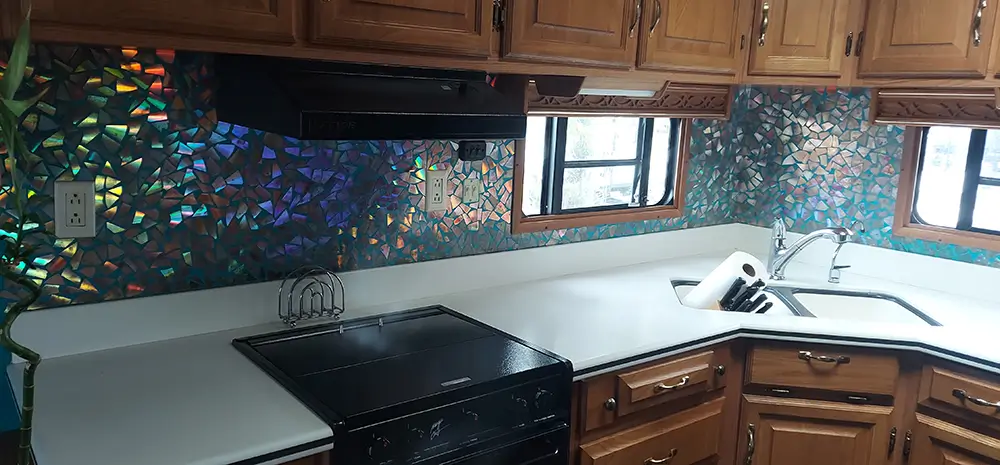
One of my biggest recycled projects was a backsplash in my RV kitchen made entirely from recycled CDs cut into mosaic designs. When the light from the skylight hit them, the colors they cast across the space were mesmerizing—fractured rainbows shifting throughout the day.
It was functional, but it was also quietly magical.
Why Glass Became the Medium
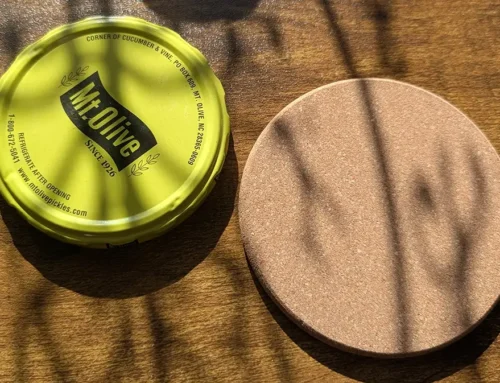
Moving into glass feels like the next step in that evolution. I’ve always hated throwing out candle jars and other glass containers—it felt wasteful, like discarding something that still had more to offer.
Glass holds light, color, and memory in a way few materials do. Transforming those everyday objects into something new feels like a continuation of how I’ve always created.
Where My Work Lives Now
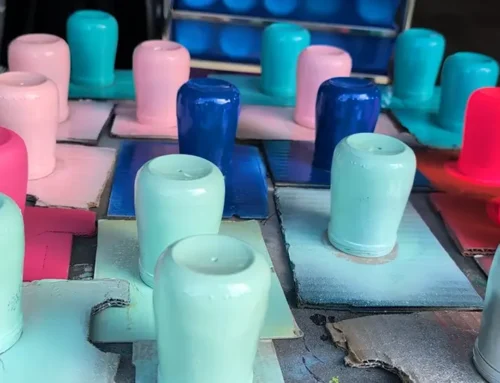
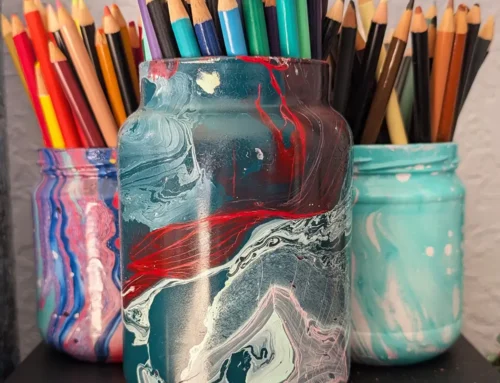
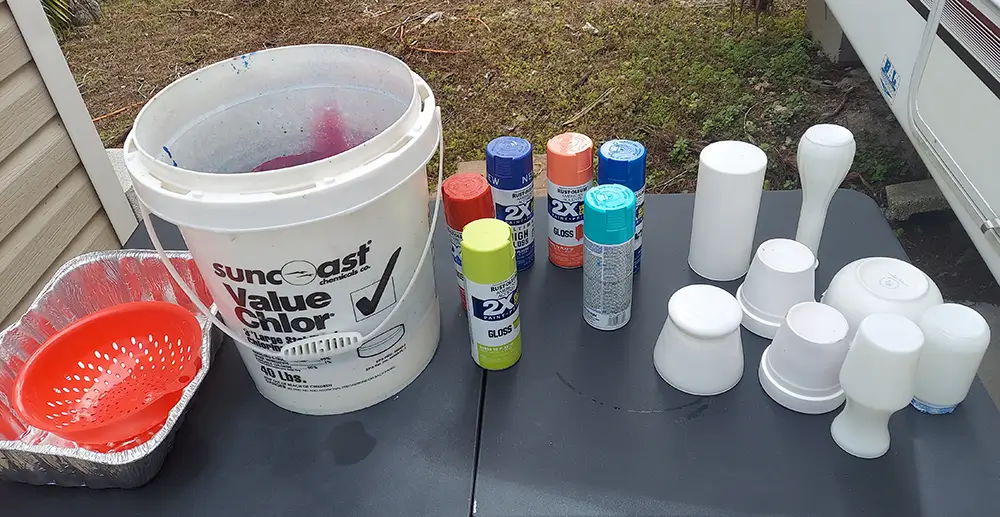
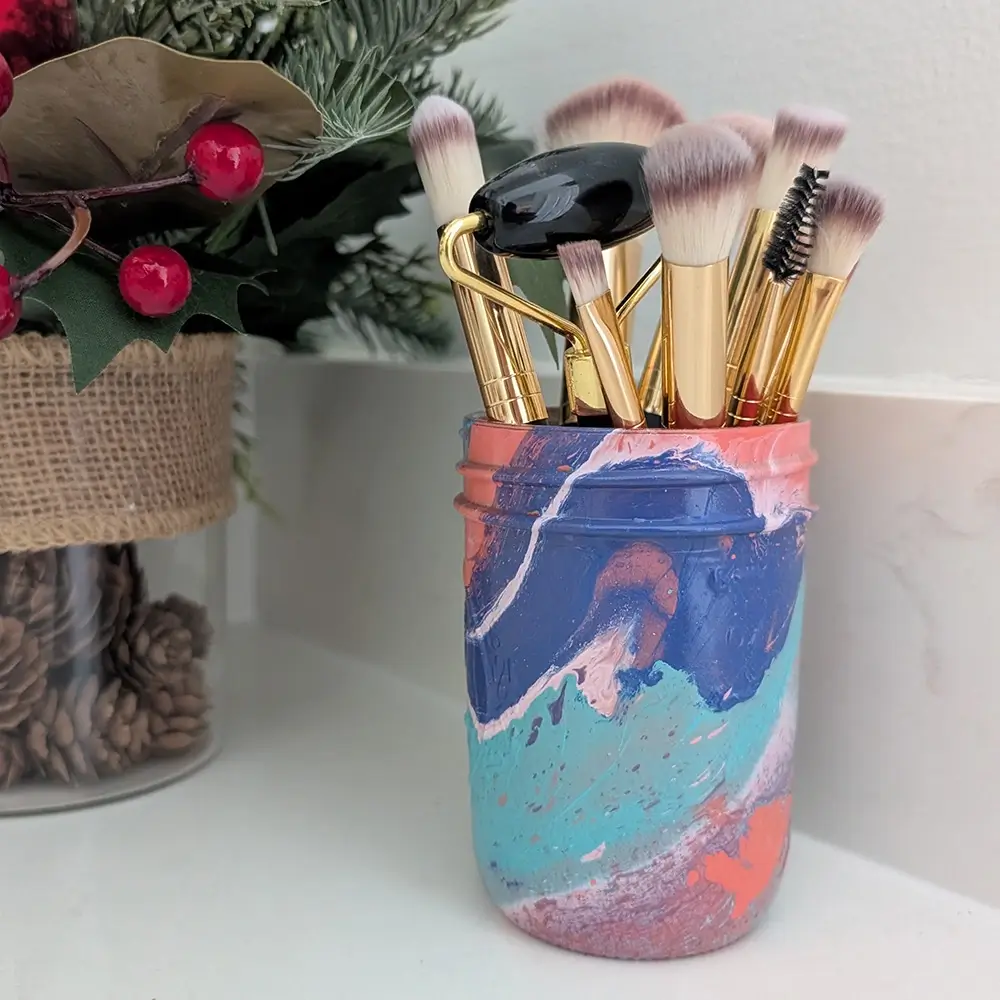
My current work with water, paint, and reclaimed glass allows for very little revision. There’s only one chance to get it right. I don’t plan a design in advance—only a color palette. Once the paint hits the water, the outcome is decided by timing, movement, and instinct. If I hesitate, the moment is gone.
Each piece is a commitment to a single moment.
Prismatic Cauldron
Prismatic Cauldron isn’t a departure from my past—it’s a continuation of it. A place where imagination, process, reuse, and transformation meet.
This blog exists to hold all of that: the art, the thinking behind it, the reading and writing that shape it, and the messy, unfinished parts of creativity that rarely make it into captions or listings.
If you’re someone who loves process as much as finished pieces, or who sees possibility in unlikely places, you’re very welcome here.
This is where it all comes together.
I didn’t arrive at my art fully formed, and it didn’t begin as a defined style or a clear plan. Like most creative paths, it grew out of curiosity, experimentation, and a lifelong habit of imagining things differently.
A Drawer and a Dreamer
Creatively, I’ve always been a drawer and a dreamer.
As a child, I loved designing anything and everything my imagination could dream up—clothes I wished existed, homes I wanted to live in, and spaces that felt more interesting than the ones around me. Drawing wasn’t about precision or skill; it was about possibility. About creating worlds, even small ones, where I could decide how things looked and felt.
I remember drawing what the finished attic of my childhood home might look like—covered in draping fabrics and fluffy pillows, with spaces meant for creativity and dreaming. On the pages of a sketchbook I still have today, characters took shape through the outfits I imagined for them, their personalities shining through edgy colors or the elegance of flowing cloth.
Growing Up Surrounded by Stories
As a teenager, that sense of imagination expanded rather than narrowed. Anime, animation, movies, home renovation shows, video games, fanfiction, and fantasy books became staples in my life. I was constantly surrounded by stories and visuals that valued atmosphere, immersion, and transformation.
I even painted murals on my walls and ceilings—not good ones, but I loved them anyway. They made my space feel alive, personal, and entirely my own. That urge to alter a space, to leave a mark, and to make something ordinary feel more magical never really went away.
Art, Games, and World-Building
When it came time for college, choosing art felt natural. I pursued a Media Arts and Animation degree, driven by a love of 3D modeling and video games. Games like Fable and The Sims weren’t just entertainment to me—they were living worlds.
They taught me to think about art not just as something to look at, but as something you inhabit. Story, design, light, and interaction working together to create experience. That way of thinking still shapes how I approach my work today.
Reading, Writing, and Learning in Public
Alongside visual art, I’ve always been a reader and a writer. I started in the fantasy and mystery genres and still frequent them today, but I’ve also been a devoted fanfiction reader since high school—and one of the things I love most about it is watching writers grow.
Fanfiction invites creativity without the pressure to be perfect from the start—or even the pressure to create your own world and characters—by letting you work within stories you already know and love. That freedom creates space for experimentation, mistakes, revisions, and growth, all unfolding in real time and often shaped by perspectives from other readers you may never have considered. Built into that process is a form of peer review: feedback, discussion, and shared enthusiasm that help creators refine their work and gain confidence. It taught me that creativity doesn’t just happen behind the scenes; it happens through practice, persistence, and exploration—supported by community.
That belief carries directly into my art.
Seeing Potential in Everyday Objects
That same way of seeing extended beyond ideas and into the objects around me.
I’ve always repurposed things without really thinking about it. Pencils went into old kids’ cups instead of brand-new desk organizers. Storage was whatever already existed and could be made useful again. It wasn’t about making a statement—it just felt natural.
As I got older, I started looking at objects not just for what they were meant to be, but for what they could become.
Light, Color, and Reuse
One of my biggest recycled projects was a backsplash in my RV kitchen made entirely from recycled CDs cut into mosaic designs. When the light from the skylight hit them, the colors they cast across the space were mesmerizing—fractured rainbows shifting throughout the day.
It was functional, but it was also quietly magical.
Why Glass Became the Medium
Moving into glass feels like the next step in that evolution. I’ve always hated throwing out candle jars and other glass containers—it felt wasteful, like discarding something that still had more to offer.
Glass holds light, color, and memory in a way few materials do. Transforming those everyday objects into something new feels like a continuation of how I’ve always created.
Where My Work Lives Now
My current work with water, paint, and reclaimed glass allows for very little revision. There’s only one chance to get it right. I don’t plan a design in advance—only a color palette. Once the paint hits the water, the outcome is decided by timing, movement, and instinct. If I hesitate, the moment is gone.
Each piece is a commitment to a single moment.
Prismatic Cauldron
Prismatic Cauldron isn’t a departure from my past—it’s a continuation of it. A place where imagination, process, reuse, and transformation meet.
This blog exists to hold all of that: the art, the thinking behind it, the reading and writing that shape it, and the messy, unfinished parts of creativity that rarely make it into captions or listings.
If you’re someone who loves process as much as finished pieces, or who sees possibility in unlikely places, you’re very welcome here.
This is where it all comes together.
Leave A Comment Cancel reply
Inside the Cauldron
No spam. Just art, ideas, and experimentation.
Sign up for the Prismatic Cauldron newsletter for blog updates, new artwork, behind-the-scenes process, and the occasional creative rant—delivered straight to your inbox.